

Synapse
This is a purely theoretical, non-technical overview for readability.
The problem
Governments
Governments, rather than breaking up monopolistic social media corporations, have begun to see them as a means of social control and profit.
(1) Disinformation
The EU’s Digital Services Act gives the European Commission the power to fine companies up to 6% of global turnover if they do not tackle "disinformation."
But who decides what the "disinformation" is?
Governments have been found consistently leaning heavily on social media institutions to carry out political agendas, suppressing inconvenient truths and blocking unrest.
A recent Supreme Court case showed the US government systematically demanding takedowns related to elections, COVID-19, and economic policy. As Justice Alito noted: "The only reason you are engaged in this is to get the platforms to do what you know you cannot do, which is to censor speech."
(2) Monetization
Governments have built revenue mechanisms that deliberately target the biggest platforms (and therefore benefit from concentration). UK Digital Services Tax (DST): applies only to groups above high thresholds (over £500m global and £25m UK in-scope revenues) and raised about £800m in 2024–25.
By forcing crypto platforms to hold US Treasuries, the government has captured a new, massive buyer for its debt.
Corporations
Roblox is the world's most successful virtual world. In it, game developers create the games which players play throughout the ecosystem. This gives Roblox the opportunity to tax the whole ecosystem.
See: "When One Creator Adds $22B in Value... and Gets <0.1% of It"
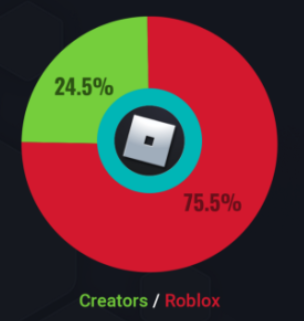
Core Creators graphic on Roblox revenue share.
Many corporations have taken note of the Roblox ecosystem. What if it was possible to create a single ecosystem, not for games, but for all software in which every transaction could be understood and potentially monetized?
“If one... company gains control of this, they will become more powerful than any government and be a god on Earth.”
- Tim Sweeney
The ability to create and monetize an entire ecosystem that contains a huge portion of the world's social and commercial interactions is the dream of key technology corporations.
“The economy in the virtual world will be larger than the economy in the physical world.”
- Jensen Huang (Nvidia)
Corporations are extremely eager to make themselves masters of such an economy.
Thesis behind Synapse
Here at Boundless, we believe that prior attempts to create virtual worlds which replace the physical are a serious mistake. Instead of immersing people in a single, all-encompassing virtual world, we believe AR will allow people to interact with the people and apps they are familiar with through a digital overlay on physical reality.
Instead of taking over the entire view of users, users will casually use these glasses to open apps on the side as they interact with the physical world.
Synapse as the solution
Synapse is an operating system (OS) that works within a person's browser that will allow them to interact with that world on phone, PC, and critically AR glasses.
Instead of using Boundless servers, the network is entirely peer-to-peer.
Instead of being centrally controlled, the project is open source.*
Instead of being designed to gather information on you, it's designed to put you in control of the information you share.
Instead of being a means to tax every transaction, Synapse is created to put people in control of their digital lives.
Synapse is a privacy-oriented, people-oriented project designed to stand in contrast to the otherwise inevitable corporate monopoly.
*Source available license
Boundless is in discussion to use a source available license rather than an open source one to avoid corporations simply taking over the system.
Key attributes of Synapse
Designed for augmented reality: Synapse is an operating system designed from the ground up to be compatible with augmented reality, phones and PCs.
Non-immersive: Synapse lets people use virtual spaces casually, without needing full immersion.
Social layer: People live at the OS level, so you bring them into any app instead of searching for them inside each app.
Signaling: Synapse lets you broadcast what app you are using so people can jump in and collaborate, enabling apps to direct users to each other for mutual benefit.
Synapse brings together all of the apps in one ecosystem without the burden of a Roblox-like tax, and to the benefit of the discovery of all the apps in the ecosystem.
This article concludes the series on the vision of boundless. It's important to remember that Boundless does not support the political left or right in any of these endeavors. It’s goal is to maximize human life and human freedom above all else.